It wasn’t a plan, not a concrete vision. We wanted to develop a memory game—we never even imagined that we’d end up in the world of augmented reality.
Everything started with a simple idea: a memory game that doesn’t just show illustrated cards, but brings to life living characters—viruses, bacteria, and other tiny creatures that teach children knowledge in a playful way. Each character could introduce itself through animated stories accessible via QR code. If kids didn’t feel like listening to the story, they could still enjoy the characters as part of the game.
We asked ourselves: How could we best convey this? We didn’t want long blocks of text, so we opted for animated videos—a narrator’s voice, a character in motion. But that wasn’t new or particularly exciting.
So we asked ourselves again: How could we make the characters even more lifelike? The answer: 3D renderings!
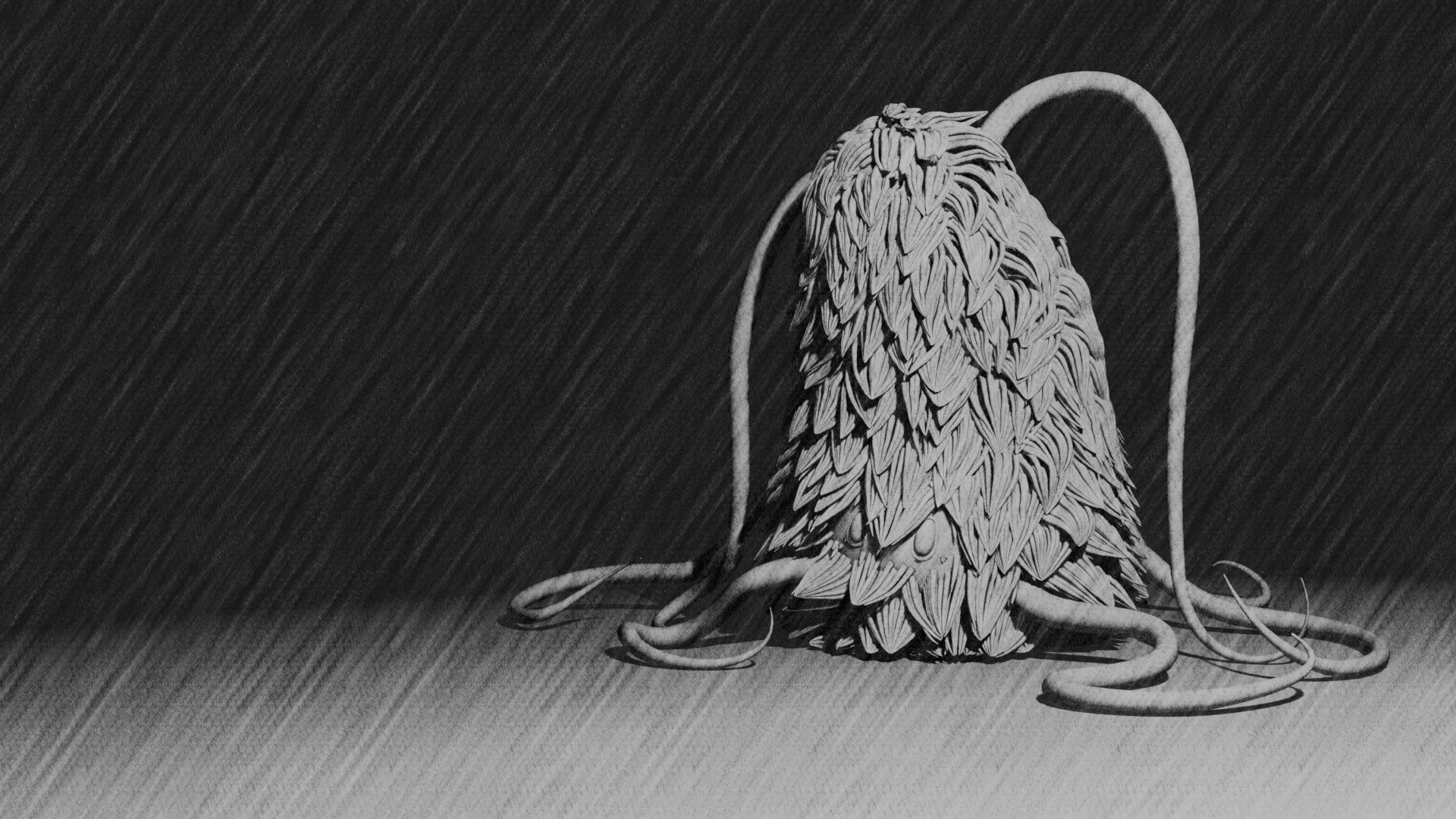
For us, 3D was uncharted territory. But what could be cooler than seeing the characters not just on a memory tile, but in 360 degrees on a screen—and even interacting with them? That’s how the idea of letting the characters speak for themselves in an interview scenario was born: users ask questions, the character responds.


But the path there was rocky. After deciding on the style and completing the illustration phase, the real learning began: Blender tutorials, self-study, and (a lot of) patience. Our first 3D model was an E. coli bacterium—strategically anything but ideal, but full of lessons. With every modeled tentacle, we made progress.
But modeling was only the beginning. Rigging and animation brought new questions: What should the characters do? Should they move, sit, or interact? Should they be rotatable, clickable, or zoomable? Where should they be located? Is a website the right medium? How do we prevent users from getting pulled out of the game?
All these questions led us to one idea: Augmented reality. The characters appear on the memory tiles themselves, scattered across the table—at least through the camera lens.
The more we delved into AR, the clearer it became: the interview scenario was no longer the focus. But the stories shouldn’t be lost. Our solution: an audio track tells the story while you observe the 3D object.
Why? Because the tiles gain a life of their own—independent of a website. Users stay immersed in the gameplay and experience the characters directly within the memory game. A seamless integration that enriches the gaming experience.
Ideas and products are constantly evolving. Who would have thought that a simple memory game would turn into an AR experience? Maybe in two weeks, we’ll have a new idea that turns everything upside down. That’s exactly what makes such projects so exciting: the room for experimentation and the freedom to adapt and try new things.
Next Steps: Test the characters in augmented reality—and see what new questions and doors open up.
So stay tuned—we are too!